
Aama
UA Feature Film Drama, PatrioticOct 01, 1965Hall Release
News
The Story about First Nepali Film 'Aama'
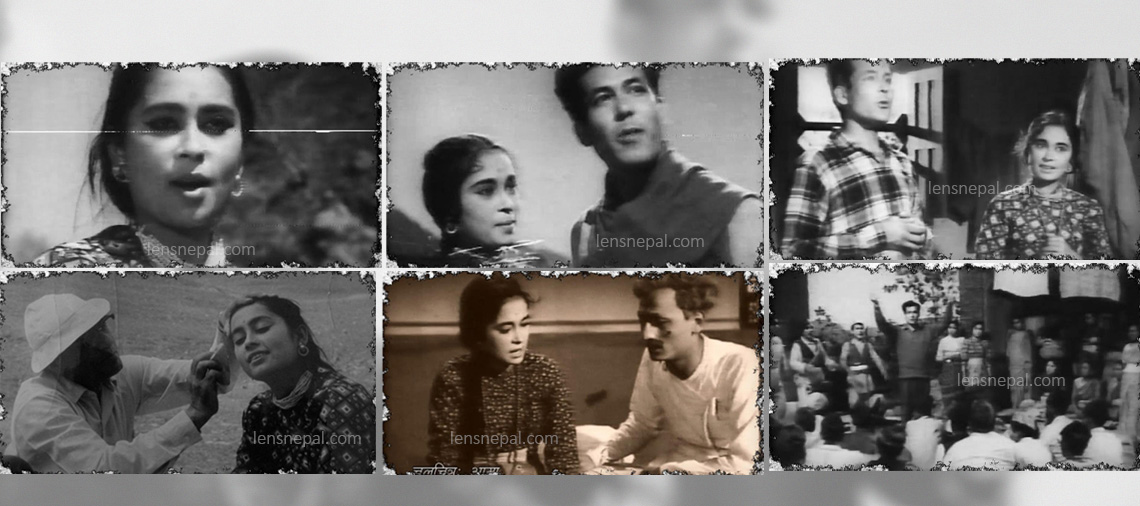
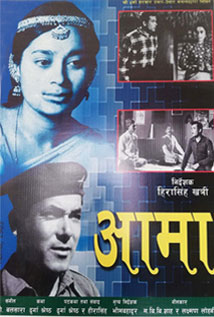
'Aama' is the first Nepali film. Its production began in 1964 AD, and it was produced by the Department of Inoformation under the Ministry of National Guidance of His Majesty's Government. At that time, the Panchayat system was in effect in the country. The government made the film in support of the Panchayat system. Reflecting Nepal as a mother, the film presents the sentiment of patriotism. According to the book History of Nepali Cinema published by the Film Development Board Nepal, the production cost of this film exceeded two lakh rupees.
Although the filming of the movie was done in Nepal, all the post-production work was done in India. Editing, dubbing, mixing, washing, printing, and negative analysis of Aama were all done in Kolkata, India. The film is black and white.
Directed by Hira Singh Khatri, the lead roles in the film were played by Shiv Shankar Manandhar and Bhuwan Thapa (Chanda). Besides them, Basundhara Bhusal, Chaityadevi Singh, Hariprasad Rimal, Uttam Nepali, Indra Lal Shrestha, Durga Prasad Shrestha, Bhim Gurung, Yadu Kumari, and the director Hira Singh Khatri himself also acted in the film. Since Chaityadevi played the role of the actor Shiv Shankar’s mother, some people have said that she acted in the title role. However, since Nepal itself was portrayed as the mother in the film, the mother role played by Chaityadevi was not the title character.
The film also included a song by then King Mahendra Bir Bikram Shah Dev, who was known in literature under the name M.B.B. Shah, as well as songs written by lyricist Laxman Lohani. The songs of the film had music by B. Balasara and vocals by Shiv Shankar Manandhar and Tara Devi. The story, screenplay, and dialogue were written by Durga Prasad Shrestha. At that time, there was no availability of film equipment and technicians in Nepal. Therefore, the necessary equipment for shooting Aama was rented from India. The cinematography was by Deuji Bhai, and the editing by Harish Pathare. Most of the technicians involved in the film were Indian.
The film Aama was first screened in public on October 1, 1965. The exhibition of the film began at the then Ranjana Cinema Hall, Kathmandu. As mentioned in the book History of Nepali Cinema, after being shown there for about one month, it was screened in turn in other cinema halls within the valley for three months.
After being shown in all the cinema halls of the Kathmandu Valley, it was also compulsory to screen it in halls outside the valley. However, since there were only a limited number of cinema halls in some cities of the country, it was not within the reach of all Nepali people. For this reason, the Department of Publicity under the then Ministry of National Guidance carried projectors, screens, generators, etc., to remote corners of various districts and screened the film.
For Nepali audiences, who had only been able to watch mostly foreign films, especially Hindi, it was natural to be excited to see a Nepali film, Nepali actors, and hear them speaking in their own language for the first time. However, it is also stated that many dramatic aspects in the film were included in an unnatural way.
The influence of Indian films on director Hira Singh Khatri’s direction is considered a cause for this. However, the social story, Nepal’s scenes, Nepal’s own language and environment, as well as the costumes of the actors, gave a sense of originality. Thus, Aama laid the foundation of Nepali cinema.
In 2025, the Ministry of Communications and Information Technology of the Government of Nepal declared Ashoj 15 (Oct 01), the day when the film Aama was publicly screened, as National Cinema Day. Also, on June 30, 2025, on the occasion of the silver jubilee of the Film Development Board, a postage stamp featuring the poster of Aama was launched.
New Releases (Mangshir 26)
-

PR
Director : Shovit Basnet
Casts : Ra Suraj Paudel, Binita Karki, Rajan Kunwar, Pooja Chaudhary, Aashma Adhikari
Next Releases (Poush 4)
-

Jhari Pachhi Ko Indreni
Director : Arjun Ghimire
Casts : Ganesh Upreti, Ramesh Upreti, Priyana Acharya, Arjun Ghimire, Prakash Ghimire